
 Global Supplier from
India | 60+ Years of Excellence | 3,900+ Products | 28+ Countries
Global Supplier from
India | 60+ Years of Excellence | 3,900+ Products | 28+ Countries
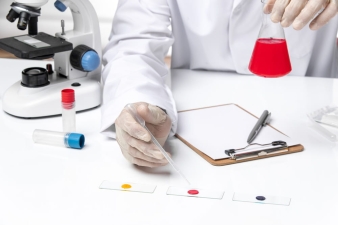
Analytical laboratories play an important role in research, education, industrial testing, and scientific investigation. The quality of laboratory instruments can influence measurement reliability, workflow efficiency, and the consistency of experimental results.
From microscopes and laboratory balances to centrifuges and spectrophotometers, every instrument serves a specific purpose. Understanding these applications helps laboratories select equipment that meets their technical requirements and operational needs.
Analytical laboratory equipment includes instruments used to examine samples, measure physical or chemical properties, separate components, and support scientific analysis.
These instruments are used in educational institutions, research centres, quality-control facilities, pharmaceutical laboratories, and other settings where reliable measurements are important.
The appropriate equipment depends on the samples being tested, the required measurement range, the operating environment, and the methods used by the laboratory.
Microscopes allow users to observe structures that cannot be examined clearly with the unaided eye. They are widely used in biology, medical education, research, and sample examination.
When choosing a microscope, consider magnification, optical quality, illumination, intended sample types, ease of use, and the availability of suitable accessories.
Centrifuges separate sample components using rotational force. They are commonly used in biological research, chemistry, clinical applications, and other sample-processing workflows.
Important selection criteria include required speed, rotor compatibility, sample capacity, safety features, and the types of tubes or containers used in the laboratory.
The correct configuration should always match the intended application and the manufacturer's operating instructions.
Balances are essential when materials must be weighed for experiments, formulations, or quality-control procedures.
Before selecting a balance, review its maximum capacity, readability, repeatability specifications, calibration requirements, and operating environment. Drafts, vibration, temperature changes, and improper handling can affect weighing performance.
Regular calibration and appropriate maintenance help laboratories maintain confidence in their measurements.
Spectrophotometers measure how a sample interacts with light at selected wavelengths. Depending on the method and instrument configuration, they can support concentration measurements, sample characterisation, and research procedures.
Selection factors include wavelength range, optical configuration, sample-holder compatibility, measurement requirements, and software or data-output needs.
Laboratory incubators, ovens, and shakers support controlled-temperature processes and sample preparation. Their applications vary across biological, analytical, educational, and industrial laboratories.
Buyers should evaluate temperature range, uniformity, capacity, controls, operating conditions, and the nature of the materials being processed.
Before investing in analytical laboratory equipment, evaluate the following:
Application requirements: Confirm the instrument is suitable for your testing or research method.
Technical specifications: Compare capacity, measurement range, performance specifications, and compatible accessories.
Calibration and maintenance: Understand service intervals and calibration requirements.
Usability: Consider training needs, controls, documentation, and ease of routine operation.
Total cost of ownership: Include installation, consumables, maintenance, and potential replacement costs.
Supplier support: Ask about product documentation, warranty terms, spare parts, and after-sales assistance.
Explore Analytical Laboratory Equipment from HOVERLABS
HOVERLABS supplies a range of laboratory products, including microscopes, centrifuges, balances, measurement instruments, incubators, ovens, and other analytical laboratory equipment.
Explore the analytical laboratory equipment range to identify products relevant to your facility's requirements.
Selecting analytical laboratory equipment involves matching instrument capabilities with the laboratory's specific applications. A careful assessment of technical specifications, maintenance requirements, and supplier support can help organisations make informed purchasing decisions.
Whether you are equipping an educational laboratory or expanding a research facility, begin with a clear list of testing requirements and compare suitable instruments before placing an order.
Looking for laboratory instruments? Contact HOVERLABS to discuss your requirements and request further product details.
Visit www.hoverexport.com to explore the product catalogue.
Our team can help you find the right equipment for your laboratory, institution or educational requirement.
Contact Our Team